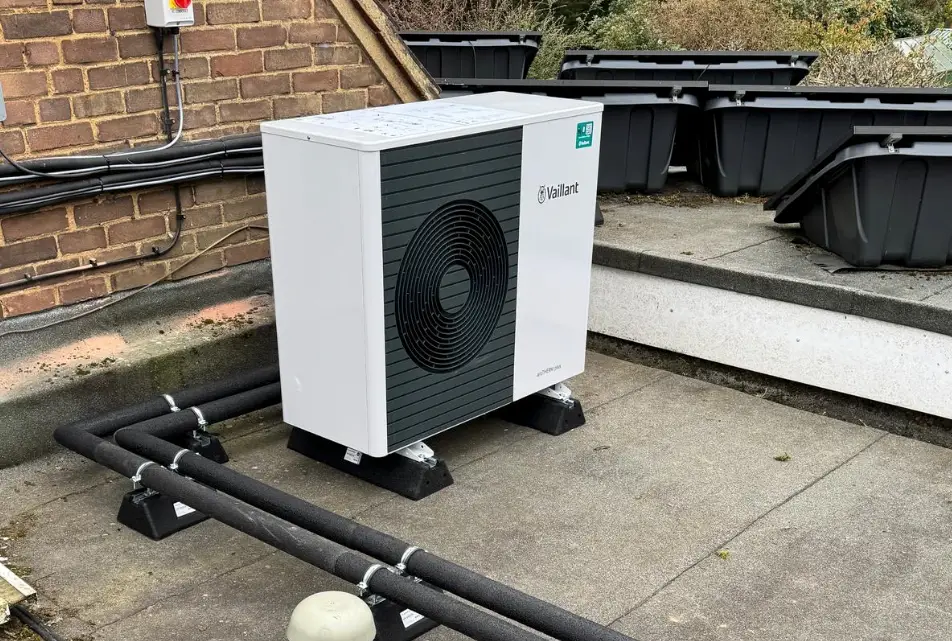

Can a 1970s house run a heat pump on the radiators it already has? This South London home can, because the system was designed around the building rather than picked from a brochure.
At a glance
1970s two-bedroom end of terrace, South London, approximately 71m².
Project overview
This project involved the design and installation of a complete low-temperature heating and hot water system for a 1970s two-bedroom end-of-terrace property in South London.
The property is approximately 71m², comprising eight rooms, two bedrooms and one bathroom.
A full room-by-room heat loss calculation was carried out before equipment selection. At the design conditions of -2°C outside and 21°C inside, the calculated whole-property heat loss was just 3.74kW.
Rather than simply selecting a heat pump based on the size of the property, the system was designed around the actual heat demand of the building and the performance of the existing heating system.
System specification
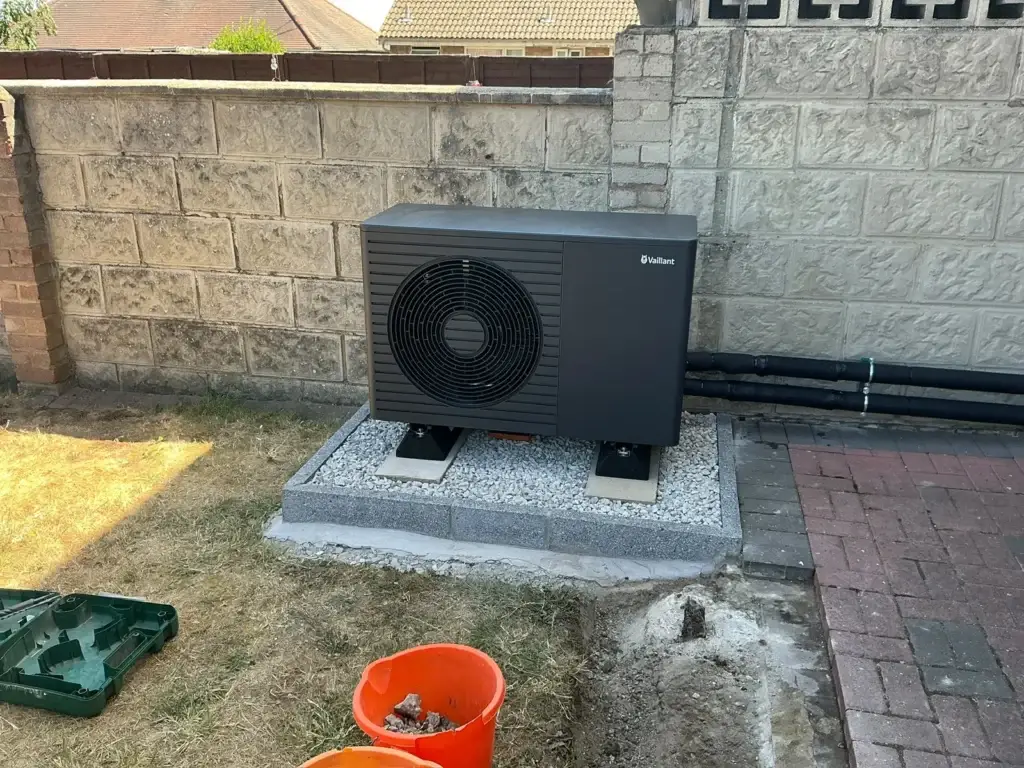
| Heat pump | Vaillant aroTHERM 5kW |
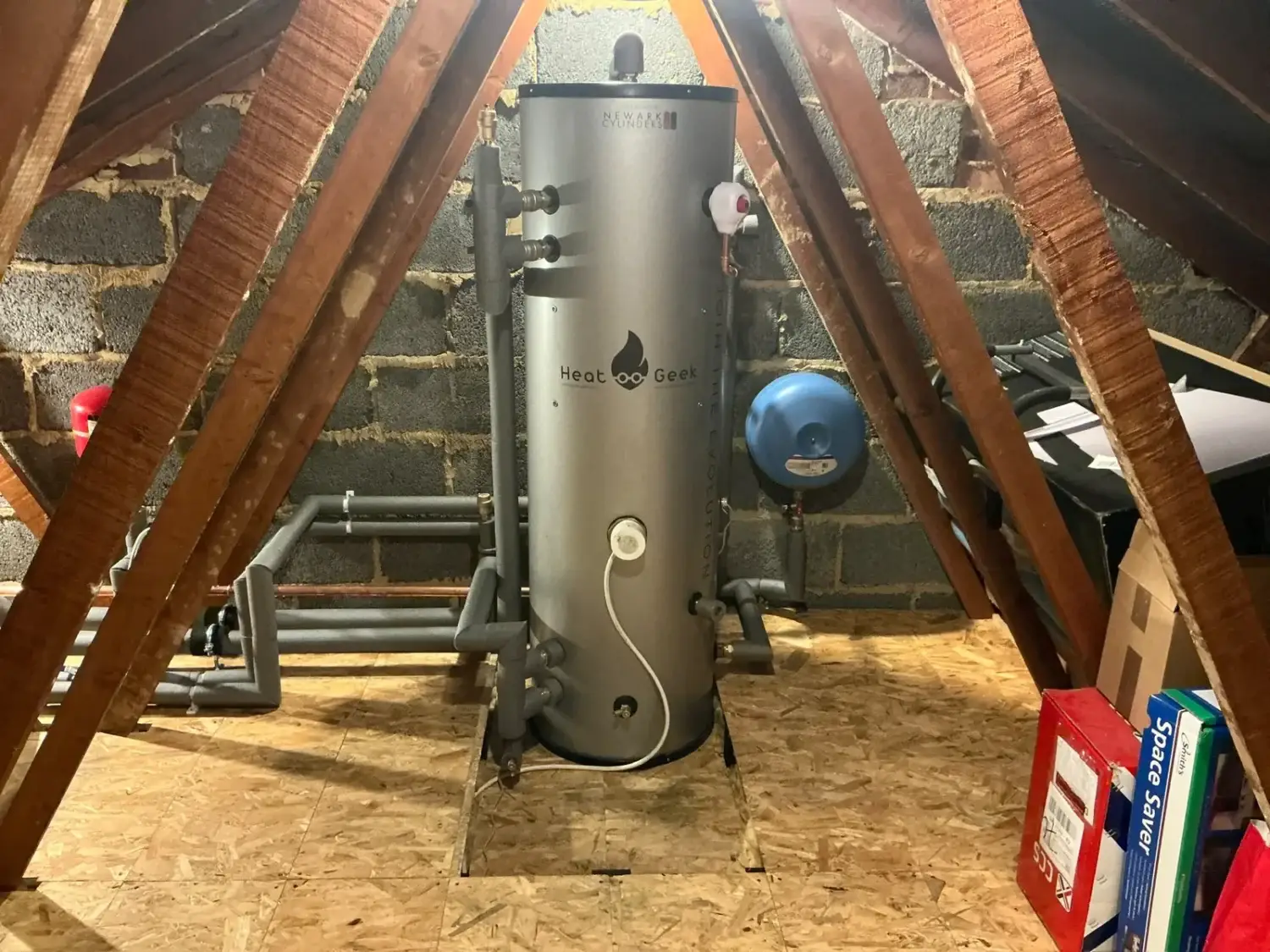
| Hot water cylinder | Newark Heat Geek Super Cylinder, 150 litre |
| Design flow temperature | 44°C |
| Hot water storage temperature | 48°C |
| Design outdoor temperature | -2°C |
| Design indoor temperature | 21°C |
| Ground design temperature | 7°C |
| Calculated heat loss | 3.74kW |
| Guaranteed efficiency | 450% through Heat Geek |
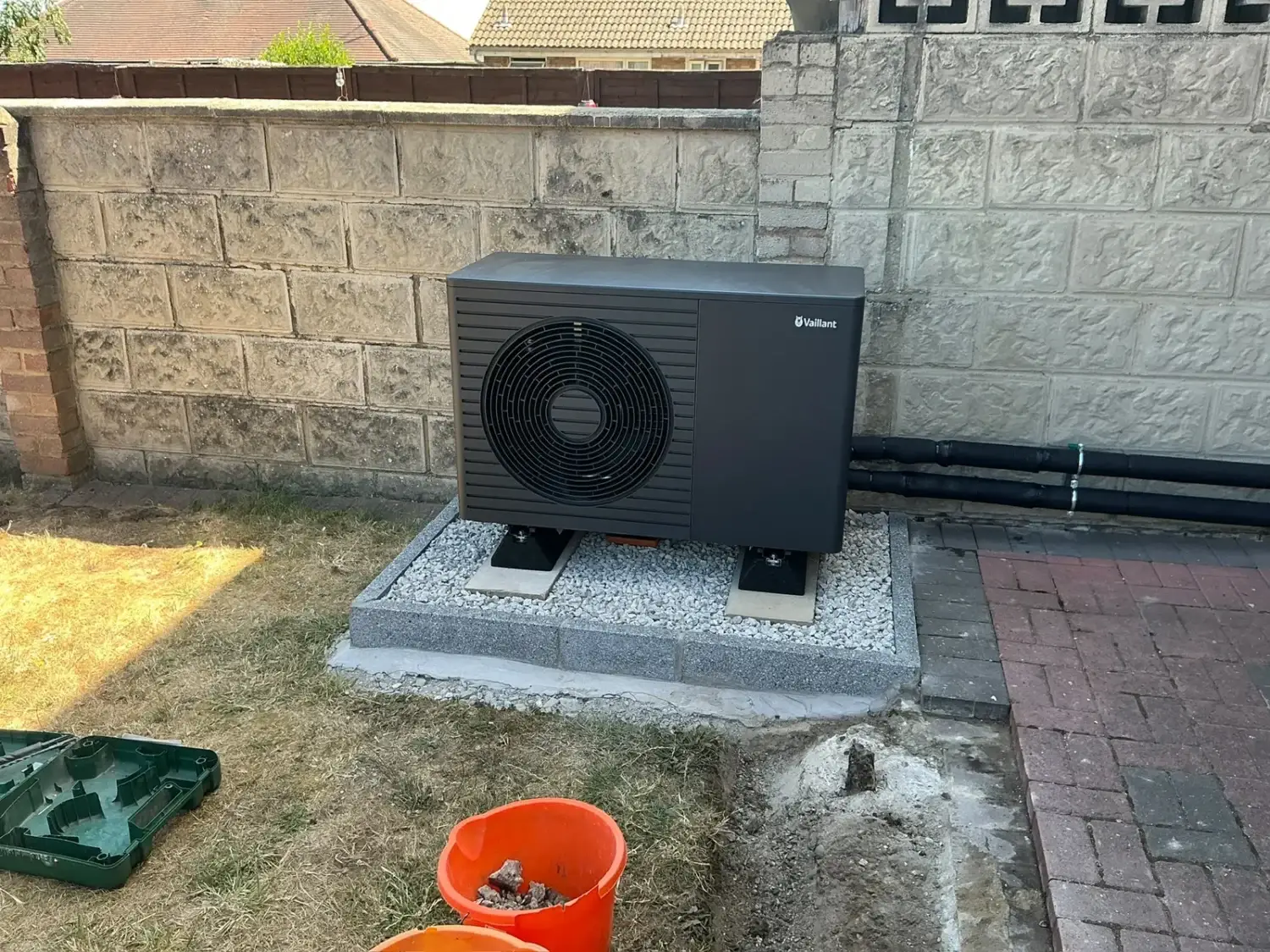
A Vaillant anthracite lower cover was also installed to give the outdoor unit and associated services a clean, finished appearance.
Making use of the existing radiators
One of the important parts of this project was establishing whether the existing radiators were capable of heating the property efficiently at the lower flow temperatures required by the heat pump.
Following our heat loss and radiator assessment, none of the existing radiators needed to be replaced.
At the 44°C design flow temperature, the existing emitters provided:
| Room | Emitter | Output at 44°C |
|---|---|---|
| Bathroom | 600 × 1100mm towel rail | 290W |
| Kitchen | Two radiators | 1,024W combined |
| Lounge | Two radiators | 1,373W combined |
| Hallway | One radiator | 183W |
| Master bedroom | One radiator | 616W |
| Children’s bedroom | One radiator | 479W |
| Office | One radiator | 342W |
This allowed us to retain the property’s existing radiators while still designing the system around a relatively low 44°C flow temperature.
Hot water assessment
The incoming water supply was assessed during the initial consultation to ensure the proposed hot water system was suitable for the property.
We recorded:
A 150 litre Newark Heat Geek Super Cylinder was selected, with the hot water storage temperature set to 48°C.
Electrical installation
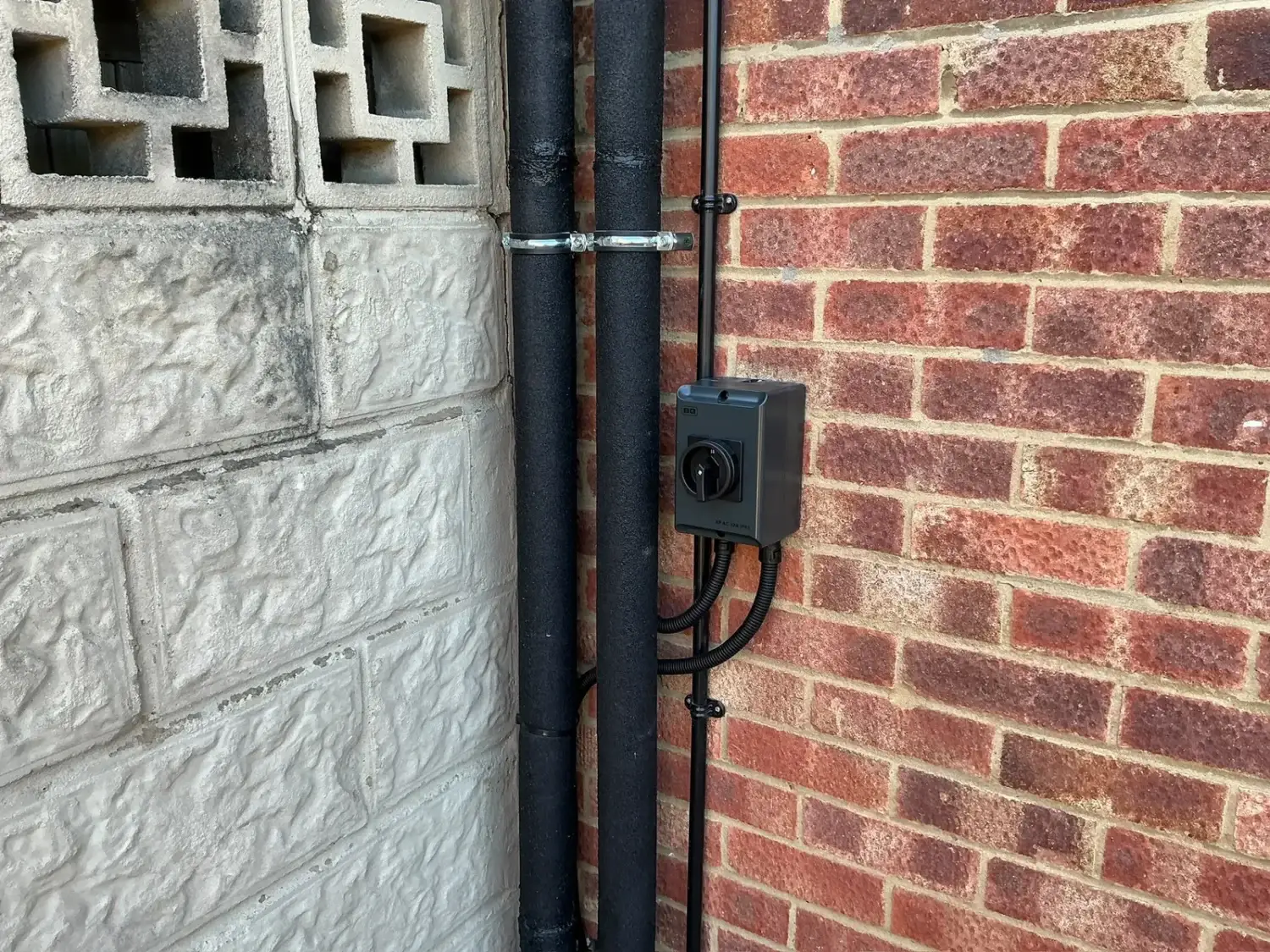
The electrical installation included a dedicated sub-board with the appropriate protective device for the heat pump installation.
Externally, we installed an anthracite grey BG 20 A double-pole rotary isolator, providing safe local isolation while maintaining a neat finish alongside the outdoor unit.
Commissioning
Once the installation was complete, the system was fully commissioned and balanced.
The recorded system flow rate at commissioning was 861 litres per hour, ensuring the heat pump had the required water flow through the heating system.
The result
The finished installation combines a 3.74kW design heat loss with a correctly sized 5kW Vaillant aroTHERM, operating at a 44°C design flow temperature.
Crucially, the project demonstrates why heat pump installations should begin with proper system design. Despite being an older 1970s property, not a single radiator needed replacing.
By assessing the building, existing emitters, water supply and electrical requirements before specifying the equipment, we were able to retain more of the existing heating system while providing the customer with a 450% Heat Geek efficiency guarantee.
A heat pump isn’t chosen from a brochure. It’s designed around the building.
What a 450% efficiency guarantee means
Heat Geek’s efficiency guarantee is based on the system design. At 450%, the heat pump is designed to deliver around 4.5kWh of heat for every 1kWh of electricity it uses.
Wondering if your radiators could work with a heat pump?
The answer starts with a proper room-by-room heat loss calculation and radiator assessment. That’s where every Bromley Energy heat pump design begins.
More heat pump case studies
Explore our heat pump installations, our Heat Geek accredited installs or all Bromley Energy case studies. To learn more about the standards behind this installation, visit our Heat Geek partner profile.