
Can Existing Radiators Work with a Heat Pump?
Essex Vaillant aroTHERM Plus Retrofit Achieving SCOP 3.7
Overview
One of the most common questions we hear from homeowners is whether their existing radiators can work with a heat pump.
This project is a great example of what is possible when a heat pump installation is designed properly, rather than simply treated as a boiler swap.
Bromley Energy designed and installed a Vaillant aroTHERM plus 7kW air source heat pump retrofit for a property in Essex. The system was designed to work with the existing radiators and underfloor heating, while achieving a measured SCOP of 3.7 under real-world conditions.
The property has a heated floor area of 181.7m² and was designed to maintain 21°C indoors at an outdoor design temperature of -2°C, with a design flow temperature of 45°C.
The Problem
The homeowner wanted to move to low carbon heating, but the existing system needed careful consideration.
The property already had:
- Existing radiators
- Underfloor heating
- Solar PV
- Battery storage
- A time-of-use electricity tariff
- A MyEnergi Eddi solar diverter for domestic hot water
On many heat pump retrofits, installers may add a buffer, low loss header or hydraulic separation when they are concerned about flow rates or system resistance.
However, adding extra components can increase cost, complexity and heat loss. In some cases, it can also reduce the overall efficiency of the system.
The aim was to retain as much of the existing heating system as possible, while simplifying the hydraulics and improving performance.
The Solution
Rather than designing around unnecessary separation, Bromley Energy looked at the heating system as a complete hydraulic circuit.
The system was reworked into a single open loop design, with no buffer, no low loss header and no hydraulic separation.
This required careful design, including:
- Heat loss calculations
- Pipe sizing calculations
- Assessment of the index circuit
- Removal of unnecessary
- UFH components
- Upgrading key pipework sections
- Correct commissioning and system balancing
The underfloor heating circulation pump and blending valve were removed, allowing the radiators and underfloor heating to work at the same flow temperature.
Key sections of pipework were upgraded to 28mm to reduce resistance and allow the heat pump circulator to operate effectively.
Technical Design
System type: Air source heat pump retrofit
Heat pump: Vaillant aroTHERM plus 7kW
Location: Essex
Property floor area: 181.7m²
Design internal temperature: 21°C
Outdoor design temperature: -2°C
Heat loss at design temperature: 6.8kW
Design flow temperature: 45°C at -2°C
Emitters: Existing radiators and underfloor heating retained
Hydraulic design: Open loop, no buffer, no low loss header, no hydraulic separation
Controls: Vaillant sensoCOMFORT with weather compensation
Cylinder: Newark Heat Geek Super Cylinder
Monitoring: Sontex heat meter and OpenEnergyMonitor
Measured performance: SCOP 3.7
Installation
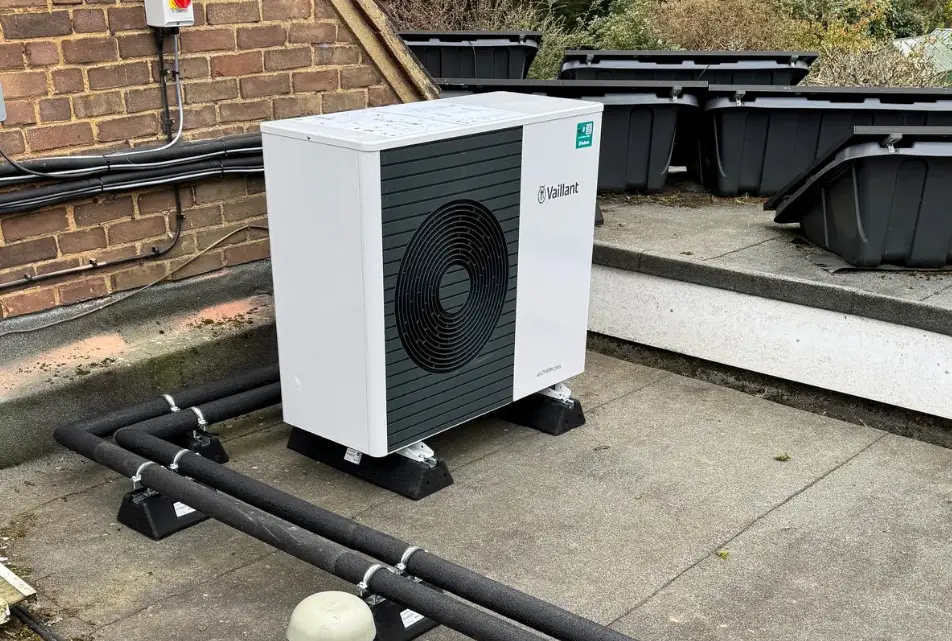
The Vaillant aroTHERM plus heat pump was installed on the flat roof, providing clear airflow and a discreet footprint.
Internally, the heating system was reconfigured to improve flow and reduce unnecessary complexity.
The installation included:
- Removal of the UFH pump and blending valve
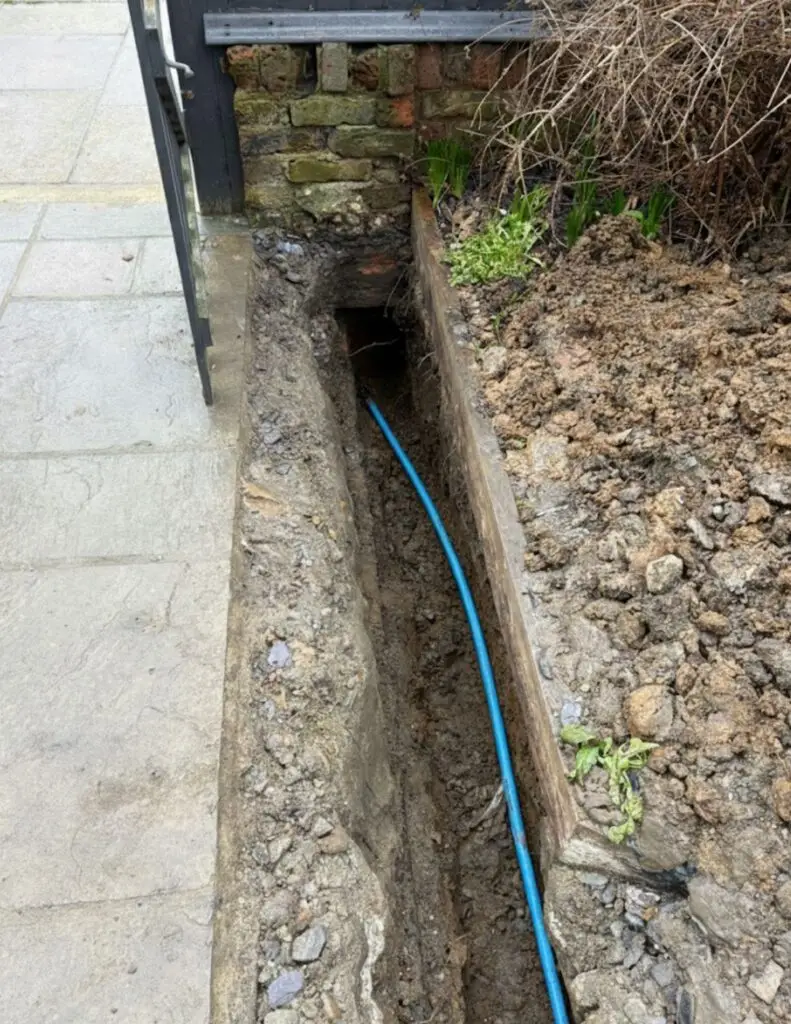
- Distribution pipework upgrades
- Installation of the Newark
- Heat Geek Super Cylinder
- Installation of a Sontex heat meter
- OpenEnergyMonitor performance monitoring
- External pipework insulation
- System balancing and commissioning
The system is now continuously monitored, measuring electrical input, thermal output, real-time COP and longer-term seasonal performance.
The Result
The final system shows that existing radiators can work with a heat pump when the design is right.
The homeowner now has:
- A Vaillant aroTHERM plus heat pump installation
- Existing radiators retained
- Existing underfloor heating retained
- No buffer tank
- No low loss header
- No hydraulic separation
- Weather compensated control
- Measured real-world SCOP of 3.7
The project proves an important point: efficient heat pump installations are not just about the heat pump itself. The real performance comes from good design, correct pipe sizing, sensible hydraulic decisions and proper commissioning.
This is where an experienced heat pump installer makes the difference.
Source Credit
This Bromley Energy project was also featured by BetaTeach as part of its Master Heat Engineer case study series. You can link back to the original article using this source credit: